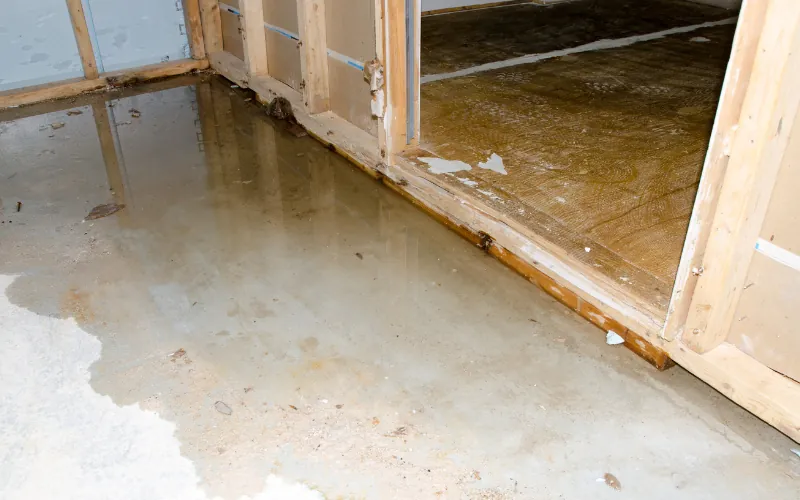
Flooding in the Dale area does not build slowly. A single Flash Flood Alley storm can push a creek over its banks and put water through a home in under an hour. Our crew answers live around the clock and reaches Dale, Lockhart, Martindale and the rest of Caldwell County within the hour to pull the water out and dry your home. Call (512) 555-0100.
How we handle flood damage cleanup in Dale
Call & dispatch
A real person answers 24/7, gets your address, and rolls the nearest Central Texas crew with truck-mounted extractors, air movers, and moisture meters.
On-site assessment
We find the source and the full reach of the water, including what soaked into subfloor, cabinets, and the wall cavities you cannot see.
Extract & dry
We pull the standing water fast, then run air movers and dehumidifiers to a measured dry standard, not just the surface.
Verify & bill
We log moisture readings until the structure reads dry, then document the loss and bill your insurance carrier directly.
How Central Texas flash floods damage a home
Dale sits in the Blackland Prairie at the edge of one of the most flash-flood-prone regions in the country. When a slow storm parks over the Balcones Escarpment, Plum Creek, Onion Creek and the San Marcos River can rise faster than the ground or the low-water crossings can carry the runoff. The National Weather Service flood safety guidance is blunt about how fast a crossing goes from passable to deadly.
Because most homes here are slab-on-grade, floodwater spreads flat and fast across the ground floor, soaks the drywall, and wicks up wall cavities and under tile where you cannot see it.
- Creek and low-water-crossing overflow near Plum Creek, Onion Creek and the San Marcos River
- Sheet flooding across slab-on-grade floors that soaks drywall and baseboards
- Water wicking up wall cavities and under tile long after the rain stops
- Saturated insulation, cabinets and flooring that trap moisture in our humidity
Our flood cleanup process
At Lone Star Water Restoration, a flood job runs in a fixed order so nothing is left wet. We start water extraction and removal the moment we arrive, then muck out the mud, sanitize every surface the water touched, and dry the structure to a measured reading.
- Pumping standing water out of ground floors, garages and low rooms
- Removing mud, silt and soaked carpet, pad and drywall that cannot be saved
- Cleaning and disinfecting the surfaces the floodwater reached
- Setting air movers and dehumidifiers and checking daily until it reads dry
Our structural drying team logs dated photos and moisture readings at every stage, so your loss is documented from pump-out to the final dry reading.
Black floodwater and what must be discarded
Water that crossed pastures, roads and ditches is not clean water. Flash floodwater usually reaches a home as category 3 black water carrying mud, farm runoff and sewage, so we treat it as a health hazard from the first step. The Ready.gov flood guidance says the same about returning to a flooded building.
- Soaked carpet, pad and upholstered furniture that held contaminated water
- Wet drywall and insulation along the bottom of the walls
- Particleboard cabinets and any porous item the black water reached
When a septic system or sewer line backs up in the same storm, our sewage and black water crew handles it with the right protection and disposal.
Insurance and flood documentation
A standard homeowners policy usually excludes rising-water flooding, typically covered only by a separate flood policy, often through the National Flood Insurance Program. Whatever coverage you carry, we document the loss in full with dated photos, readings and a written scope.
Cost depends on how much water came in and how far it spread. Size up a range on our water damage cost calculator, then call for an exact quote.
Water rising in your home right now? Call and a Central Texas crew heads your way across Caldwell County to start the pump-out.
☎ Call (512) 555-0100Did the water come over a low-water crossing?
If a creek or a low-water crossing put the water in your home, the risk is not over when the rain stops, because the ground stays saturated and the next storm can do it again. Our Flood and Freeze Risk Check walks you through your creek proximity and foundation so you know what to watch.
"Plum Creek came up overnight and our floors were under water by morning. They were out to Martindale within the hour, pumped it all out that day, and dried the house with checks every morning until the meters read right. Steady, honest people on a very bad day."
Marisela V. · Martindale · May 2025
Why Dale and Caldwell County call us first
On site within the hour
A person answers 24/7 and the nearest crew rolls the moment you call, day or night, across Dale, Lockhart, Kyle, Buda, and San Marcos.
IICRC certified crews
Trained technicians with truck mounted extractors, air movers, and moisture meters, drying to a measured standard, not a mop and a box fan.
We bill your insurer
We document the loss with photos and readings and work with your carrier directly, so the paperwork is not left on you.
Built for Central Texas water
Flash floods off Plum Creek, freeze bursts, and slab leaks on Blackland clay, we know how water moves through homes here.
Serving Dale, Caldwell County, and the corridor
Seated near Dale on FM 1854, we respond across Caldwell County and the Kyle, Buda, and San Marcos corridor, day or night.
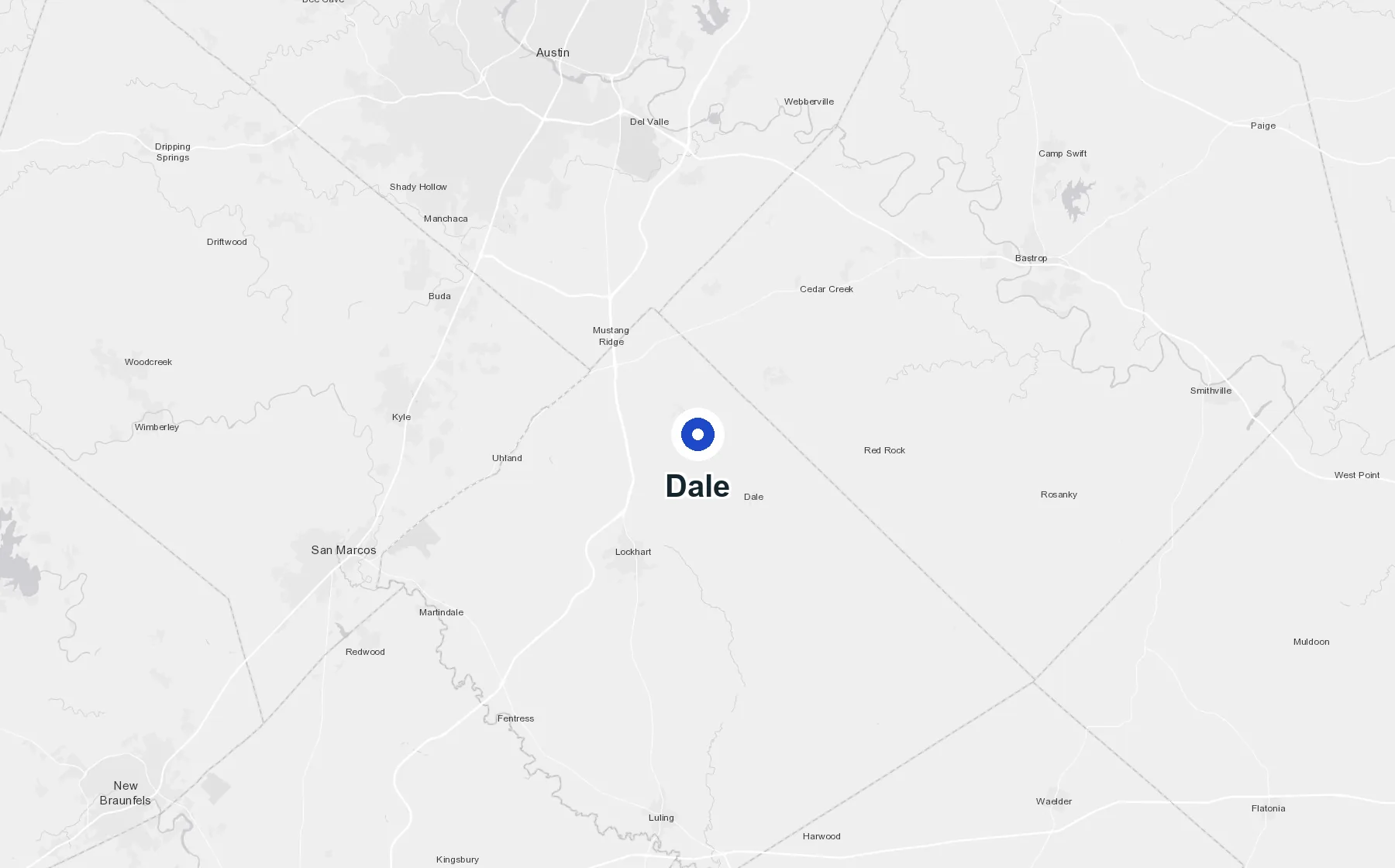
Seated near Dale on the FM 1854 corridor, our crews cover all of Caldwell County and the Kyle, Buda, and San Marcos corridor, day or night, and reach most homes within the hour.
We serve Dale, Lockhart, Kyle, Buda, San Marcos, Luling, Martindale, Maxwell, Niederwald, Uhland, Mustang Ridge, and Del Valle.
See every community and ZIP we serve ›Related restoration services
Common questions, answered
What causes flooding around Dale and Caldwell County?
Most flooding comes from Flash Flood Alley storms that overwhelm the creeks and low-water crossings all at once. Plum Creek, Onion Creek and the San Marcos River can rise faster than the ground can carry the runoff, and the water fills slab-on-grade ground floors and garages first.
Is floodwater dangerous or black water?
Often, yes. Water that crossed pastures, roads and ditches usually reaches a home as category 3 black water carrying mud, farm runoff and sewage, so it should be treated as a health hazard. We protect our crew, disinfect surfaces, and remove porous material that cannot be cleaned.
Does homeowners insurance cover flooding?
A standard homeowners policy usually excludes rising-water flooding, which is typically covered only by a separate flood policy, often through the National Flood Insurance Program. We document the loss in full regardless, so you have a complete record for whatever coverage you carry.
How fast can you get to my home?
We answer live 24/7 and reach most of Dale, Lockhart and central Caldwell County within about an hour, a bit longer to the far edges of the service area. With floodwater, that speed matters, because the sooner it is out the less soaks into the structure.
Can you save flooded furniture and belongings?
We save what can be safely cleaned and dried and remove what cannot. Solid wood furniture often dries out, while upholstered pieces and mattresses that soaked in contaminated floodwater are usually safer to discard. We document everything for your claim.
How long does flood cleanup and drying take?
Extraction and muck-out are usually the first day. Structural drying then runs about three to five days depending on how much water came in and how far it spread, and we monitor daily until the structure reads truly dry.
What should I do right after a flood?
Stay out of standing water until power to that area is off, avoid contact with the contaminated water, move what you can to a dry spot, and photograph everything for your claim. Then call (512) 555-0100 and a crew heads your way.
How much does flood cleanup cost?
It depends on how much water came in, how far it spread, and how much material has to be removed. We assess on site, give you a clear scope, document for your insurer, and bill most carriers directly where the policy allows. Call (512) 555-0100 for a straight answer.
Dale's water damage crew is standing by
Water sitting means damage spreading. Call Lone Star Water Restoration and a local crew is on the way, on site within the hour across Caldwell County.
(512) 555-0100Talk to a Central Texas crew now, day or night