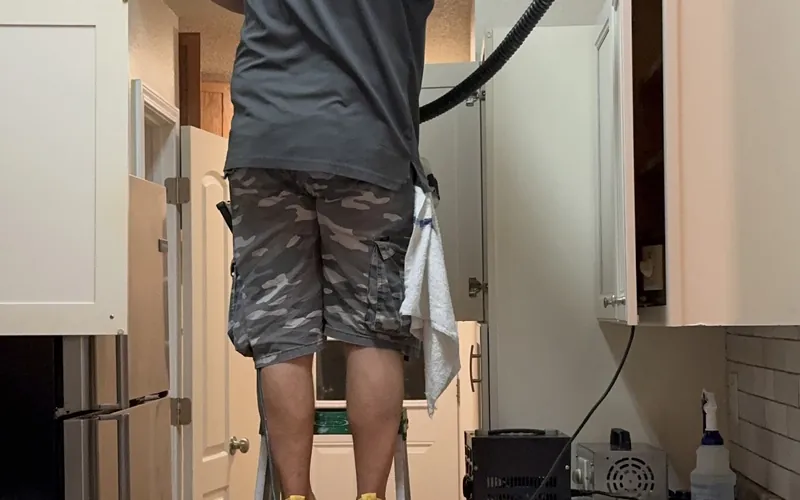
When a Central Texas storm drives rain through the roof, the water does not stop at the shingles. It runs down the decking, soaks the attic insulation, and shows up as a spreading stain on the ceiling below, sometimes days after the storm has passed. Our crew tarps the opening to stop more water coming in, dries out the attic and ceiling, and documents the roof failure for your claim, on site within the hour across Dale and Caldwell County.
How we handle roof leak water damage in Dale
Call & dispatch
A real person answers 24/7, gets your address, and rolls the nearest Central Texas crew with truck-mounted extractors, air movers, and moisture meters.
On-site assessment
We find the source and the full reach of the water, including what soaked into subfloor, cabinets, and the wall cavities you cannot see.
Extract & dry
We pull the standing water fast, then run air movers and dehumidifiers to a measured dry standard, not just the surface.
Verify & bill
We log moisture readings until the structure reads dry, then document the loss and bill your insurance carrier directly.
How Central Texas roofs start leaking
Roofs here take a beating from spring and fall storms long before age catches up. Most of the roof leaks we dry out trace back to one of a few weather driven causes.
- Hail that bruises or cracks shingles, so a roof that looked fine starts leaking weeks later.
- Wind driven rain forced up under shingles, through ridge vents, or around chimney flashing.
- Aging or lifted flashing at valleys, vents, and chimneys, where older roofs give up first.
- Debris and granule loss on a sun beaten roof that thins the shingle and opens a path for water.
The storm that caused the roof to fail is often the same event we clean up as storm damage water cleanup, and the interior side is ceiling leak water damage. A roof leak ties all three together.
Attic and envelope water damage
The attic takes the quiet damage. Water pools on the ceiling drywall and soaks the insulation, and stays wet a long time in our dark, closed up, humid attic.
- Wet blown in insulation mats down, loses R value, and holds water against the ceiling.
- Damp decking and rafters can grow mold within a day or two if not dried out.
- A soaked ceiling can sag and, left long enough, let go entirely.
Because the roof and attic take the first hit, we check both with a moisture meter and thermal camera, not just the visible stain. The National Weather Service thunderstorm safety pages and the NOAA Storm Prediction Center are useful references on our severe weather and hail.
Our roof leak water cleanup and drying
We handle the water side of a roof leak from the first tarp to a documented, dried attic and ceiling, and coordinate the roof repair so both sides line up. We tarp the opening, trace the water with meters and a thermal camera, pull soaked insulation and any ruined drywall, and dry the decking, rafters, and ceiling to a verified reading through our structural drying process. Dated photos and readings go into the file for your adjuster.
Documenting a roof or storm claim
A roof leak claim goes more smoothly when the storm and water damage are documented together, which is a big part of what we do.
- We separate storm caused sudden damage, usually covered, from long term wear, which may not be, and document accordingly.
- We coordinate with the roofer so the roof repair and interior dry out are recorded as one loss.
- We bill your carrier directly and walk you through the numbers. Our cost calculator gives a range before you call.
Roof leaking after a Central Texas storm? Call now. A Caldwell County crew tarps the roof, dries the attic, and documents it for your claim, on site within the hour.
☎ Call (512) 555-0100The hail leak that shows up weeks later
After a spring or fall hail storm rolls through Caldwell County, a bruised roof can look fine from the ground and still leak in the next heavy rain. If your roof took hail this season, or you see a fresh ceiling stain, have the attic checked before wind driven rain finds the weak spot. Catching it early keeps a small leak from becoming a torn out ceiling.
"A hail storm came through and a few weeks later the ceiling in our back bedroom started dripping in the next rain. They had a tarp on the roof within the hour, pulled the soaked attic insulation, and dried everything to a reading instead of just mopping up. They photographed where the roof failed so our claim went through without a fight. Calm and professional on a stressful night."
Delia F. · Luling · October 2025
Why Dale and Caldwell County call us first
On site within the hour
A person answers 24/7 and the nearest crew rolls the moment you call, day or night, across Dale, Lockhart, Kyle, Buda, and San Marcos.
IICRC certified crews
Trained technicians with truck mounted extractors, air movers, and moisture meters, drying to a measured standard, not a mop and a box fan.
We bill your insurer
We document the loss with photos and readings and work with your carrier directly, so the paperwork is not left on you.
Built for Central Texas water
Flash floods off Plum Creek, freeze bursts, and slab leaks on Blackland clay, we know how water moves through homes here.
Serving Dale, Caldwell County, and the corridor
Seated near Dale on FM 1854, we respond across Caldwell County and the Kyle, Buda, and San Marcos corridor, day or night.
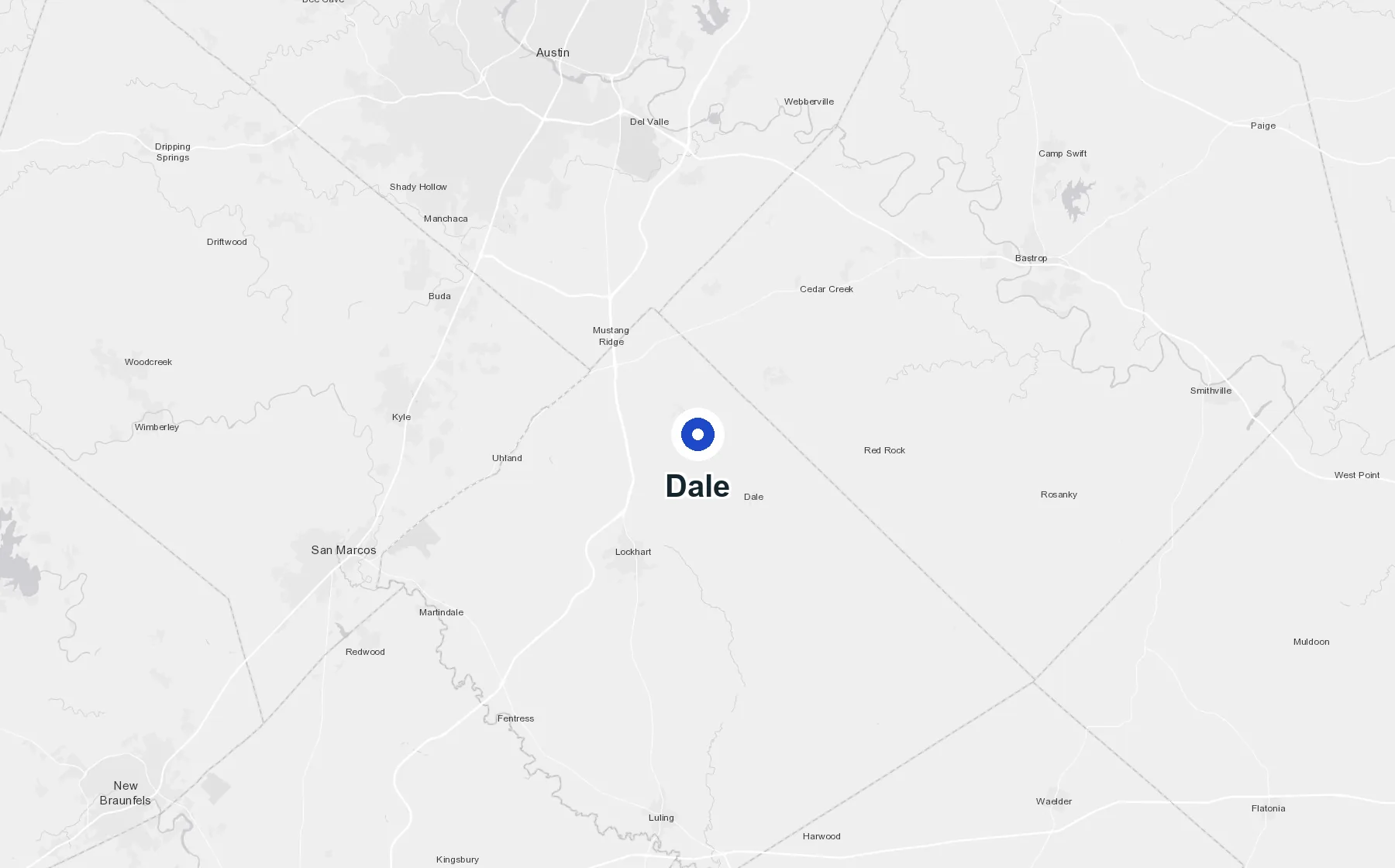
Seated near Dale on the FM 1854 corridor, our crews cover all of Caldwell County and the Kyle, Buda, and San Marcos corridor, day or night, and reach most homes within the hour.
We serve Dale, Lockhart, Kyle, Buda, San Marcos, Luling, Martindale, Maxwell, Niederwald, Uhland, Mustang Ridge, and Del Valle.
See every community and ZIP we serve ›Related restoration services
Common questions, answered
How fast can you respond to a roof leak in Dale?
We answer live 24/7 and reach most of Dale and Caldwell County within the hour. A roof leak keeps soaking the attic and ceiling until the opening is tarped, so a fast response and a quick tarp are what limit the damage before more rain arrives.
Can you tarp the roof at night or in a storm?
Yes. Stopping more water from coming in is the first priority, so we tarp or stabilize the opening around the clock, then dry the attic and ceiling. The tarp is a temporary measure to protect the home until the roof can be properly repaired.
Do you fix the roof too, or just the water damage?
Our crews handle the water side, the tarp, extraction, and drying the attic and ceiling, and we coordinate with a roofer for the permanent repair. Documenting the roof failure and the interior damage together helps your claim move as one loss.
Why did my ceiling start leaking weeks after a hail storm?
Hail can bruise or crack shingles without an obvious hole, so a roof that looked fine keeps its seal until the next heavy rain works through the weak spot. That delay is common in Central Texas, which is why an attic check after a hail storm is worth it.
How do you know how far the water spread in the attic?
We use moisture meters and a thermal camera to trace the water through the decking, insulation, and ceiling rather than trusting what is visible. Wet insulation and framing that are missed will hold moisture and grow mold, so we map the full extent first.
Does insurance cover roof leak water damage?
Sudden storm caused damage, like hail or wind driven rain, is usually covered, while a leak from long term wear or a roof past its life may not be. We document the point of failure and the water damage so your adjuster can tell the difference, and we bill the carrier directly.
Will a roof leak cause mold?
It can, quickly. A wet attic in our humidity can grow mold within a day or two, so we dry the decking, rafters, insulation, and ceiling to a verified reading and treat the area where the water sat, rather than closing the attic back up while it is still damp.
What areas do you cover for roof leaks?
All of Dale and Caldwell County plus the surrounding corridor, including Lockhart, Kyle, Buda, San Marcos, Luling, and Martindale. Storms rarely hit just one town, so we stage crews to reach the whole area quickly after severe weather.
Dale's water damage crew is standing by
Water sitting means damage spreading. Call Lone Star Water Restoration and a local crew is on the way, on site within the hour across Caldwell County.
(512) 555-0100Talk to a Central Texas crew now, day or night