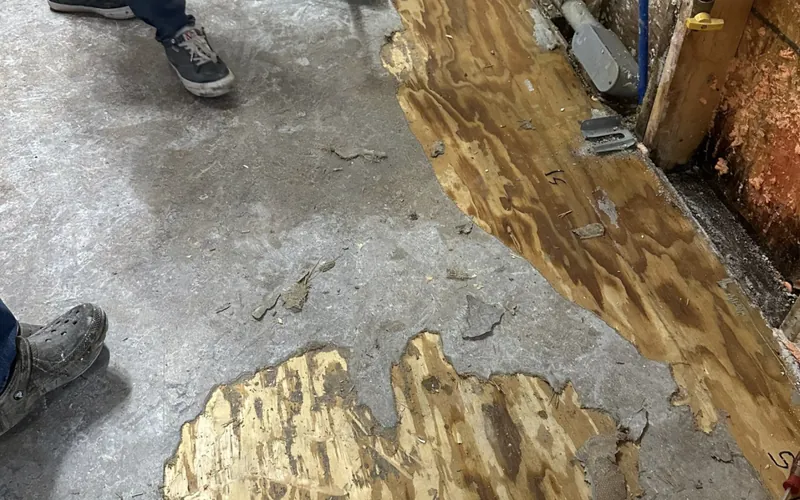
A slab leak is the water failure Central Texas homes are almost built to get. Most houses here sit on a slab-on-grade foundation over expansive Blackland clay, and the ground moves enough to stress the water lines running through the concrete. We handle the water damage, map the moisture, and dry it out, then coordinate a licensed plumber for the repair. Call (512) 555-0100.
How we handle slab leak water damage in Dale
Call & dispatch
A real person answers 24/7, gets your address, and rolls the nearest Central Texas crew with truck-mounted extractors, air movers, and moisture meters.
On-site assessment
We find the source and the full reach of the water, including what soaked into subfloor, cabinets, and the wall cavities you cannot see.
Extract & dry
We pull the standing water fast, then run air movers and dehumidifiers to a measured dry standard, not just the surface.
Verify & bill
We log moisture readings until the structure reads dry, then document the loss and bill your insurance carrier directly.
Why slab leaks happen on Central Texas clay
Dale and Caldwell County sit on Blackland Prairie clay that swells when it is wet and shrinks when it is dry. That constant movement lifts and drops slab-on-grade foundations and stresses the copper and drain lines cast into them until a line springs a leak under the floor. Texas A&M AgriLife Extension explains how these soils behave; see the AgriLife Extension resources on expansive clay.
There are no basements here, so a slab leak is the local equivalent of the basement flood other regions worry about. It is hidden, slow, and it does its damage from below.
- Slab-on-grade foundations cast over expansive Houston Black and Taylor clay
- Wet-dry cycles that move the slab and stress the under-slab lines
- Copper supply lines corroding in the soil and the hard water
- Aging drain lines under older Lockhart and Luling homes
Signs you have a slab leak
A slab leak often hides for weeks because the water is trapped under the floor. It shows itself in small ways first, then all at once when the flooring lifts or a wall goes damp.
- A warm or damp spot on a tile or wood floor over the slab
- A water bill that climbs for no clear reason
- The sound of running water when every fixture is off
- Buckling flooring, a swelling baseboard or a musty smell
- Low hot-water pressure when the leak is on the hot line
A hot-line leak often shows first as that warm patch underfoot. The EPA WaterSense Fix a Leak program treats a sudden jump in use as a leak signal, and so should you.
How we find and dry a slab leak
Lone Star Water Restoration focuses on the mitigation, the extraction and the drying, and coordinates the plumbing repair so you are not managing two crews on a hard day.
- Moisture meters and thermal imaging to map how far the water spread
- Water extraction and drying of flooring, subfloor and wall bases
- Drying mats and injection to pull water from under tile and through the slab
- Coordination with a licensed plumber to locate and repair the failed line
Because the water sits under the floor, the goal is a measured dry-out, not a guess. Our structural drying team logs daily readings until the slab and wall bases hit a documented target.
Foundation, insurance and next steps
Insurance on a slab leak cuts both ways. The pipe repair itself is often excluded, but the sudden resulting water damage to floors and walls is frequently covered, and we document the loss so your adjuster can tell the two apart. Left wet, a slab leak becomes a mold problem inside walls and under flooring.
You can size a range on our water damage cost calculator, then call for an exact quote.
Warm spot on the floor or a doubled water bill? Call now and we will map the moisture today.
☎ Call (512) 555-0100A climbing water bill is a warning, not a fluke
When the bill jumps and a spot on the floor feels warm, the clock is already running. The longer under-slab water sits, the further it wicks up drywall and the more flooring has to come out. Catch it early and we can often dry the floor in place instead of a full tear-out, so the smart move is to call the day you notice the signs.
"One corner of the kitchen tile stayed warm and the water bill kept climbing. They came out, found the wet area under the slab, and dried it without tearing up the whole floor. They lined up a plumber for the copper line and checked the readings every day. Honest and careful from start to finish."
Weldon H. · Dale · April 2026
Why Dale and Caldwell County call us first
On site within the hour
A person answers 24/7 and the nearest crew rolls the moment you call, day or night, across Dale, Lockhart, Kyle, Buda, and San Marcos.
IICRC certified crews
Trained technicians with truck mounted extractors, air movers, and moisture meters, drying to a measured standard, not a mop and a box fan.
We bill your insurer
We document the loss with photos and readings and work with your carrier directly, so the paperwork is not left on you.
Built for Central Texas water
Flash floods off Plum Creek, freeze bursts, and slab leaks on Blackland clay, we know how water moves through homes here.
Serving Dale, Caldwell County, and the corridor
Seated near Dale on FM 1854, we respond across Caldwell County and the Kyle, Buda, and San Marcos corridor, day or night.
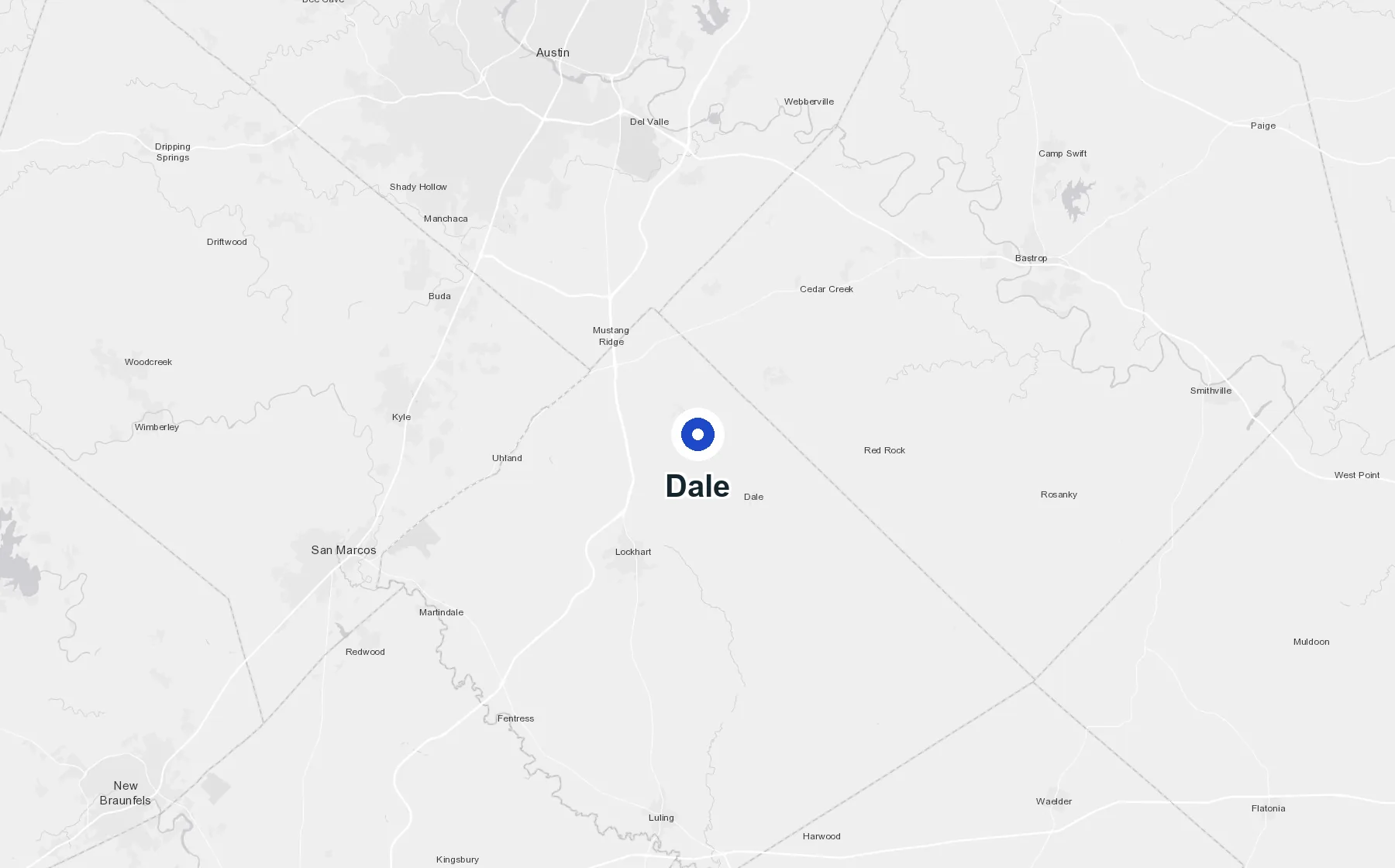
Seated near Dale on the FM 1854 corridor, our crews cover all of Caldwell County and the Kyle, Buda, and San Marcos corridor, day or night, and reach most homes within the hour.
We serve Dale, Lockhart, Kyle, Buda, San Marcos, Luling, Martindale, Maxwell, Niederwald, Uhland, Mustang Ridge, and Del Valle.
See every community and ZIP we serve ›Related restoration services
Common questions, answered
How do I know if I have a slab leak?
Watch for a warm or damp spot on the floor, a water bill that climbs for no reason, the sound of running water with everything off, buckling flooring, a swelling baseboard, or low hot-water pressure. Any one of these in a slab-on-grade home is worth a same-day look.
Why are slab leaks common around Dale?
Dale and Caldwell County sit on expansive Blackland Prairie clay that swells and shrinks with the weather. That movement lifts and drops slab-on-grade foundations and stresses the copper and drain lines cast into the concrete, while the soil and hard water corrode the copper. It is a signature Central Texas failure.
Do you find the leak or just clean up the damage?
We handle the water damage: the moisture mapping, the extraction and the drying. For the pipe itself, we coordinate a licensed plumber to pinpoint and repair the line, so the detection, the repair and the dry-out all get done without you juggling crews.
Is a slab leak like a basement flood?
In a way, yes. There are no basements in Central Texas, so a slab leak is the local equivalent: hidden water doing its damage from below the floor rather than up from a basement. It hides longer, which is why the early warning signs matter.
Will insurance cover slab-leak damage?
Often the sudden resulting damage to floors and walls is covered even when the pipe repair is excluded. It depends on your policy and how the loss is documented. We record the cause and the moisture readings so your adjuster can separate the covered damage from the excluded repair.
Can you dry the floor without tearing out all the tile?
Frequently, yes, if we get to it early. Drying mats and injection systems pull water from under tile and through the slab so the floor can dry in place. The longer the water sits, the more likely some flooring has to come out, which is why calling early matters.
Can a slab leak cause mold?
Yes. Hidden under-slab water wicks up drywall and sits under flooring out of sight, and in our humidity that is exactly how mold takes hold. Drying fast to a measured reading is how we keep a slab leak from turning into a mold job.
How much does slab-leak water damage cleanup cost?
It depends on how far the water spread, how much flooring is affected, and how long it sat. We give a clear scope up front and bill your carrier directly where the resulting damage is covered. Call (512) 555-0100 for a straight answer.
Dale's water damage crew is standing by
Water sitting means damage spreading. Call Lone Star Water Restoration and a local crew is on the way, on site within the hour across Caldwell County.
(512) 555-0100Talk to a Central Texas crew now, day or night